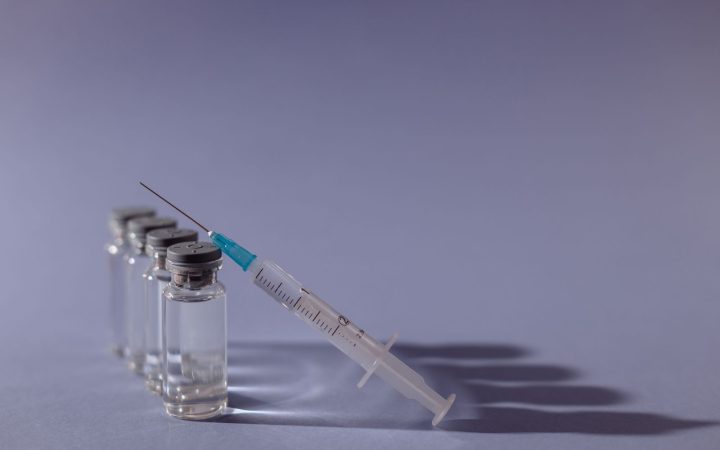
In February 2025, Hims & Hers aired a 60-second Super Bowl LIX commercial called “Sick of the System” promoting its compounded semaglutide at under $200 a month. Critics noted it carried no side-effect or risk information of the kind pharmaceutical advertising normally requires, and that the disclosure it did carry — noting the products are not FDA-approved — appeared for about three seconds in small, barely legible text.
Two senators from opposite parties wrote to the FDA about it. Then came the part that matters most today: on 21 February 2025 the FDA declared the semaglutide shortage resolved, which removed the legal exemption that allowed compounders to make copies at all. By mid-2025 the courts had backed the FDA, and the pathway is now essentially closed. ⚖️
- What the ad actually said
- What was missing from it
- The bipartisan letter to the FDA
- The defence, stated fairly
- What “compounded” actually means
- The twist twelve days later
- What happened next
- Where this stands in 2026
- If you’re buying GLP-1s online now
- Red flags in telehealth marketing
- Common mistakes
- Frequently asked questions
- Your checklist
What the ad actually said
Super Bowl advertising is the most expensive real estate in American media, and in February 2025 the telehealth company Hims & Hers used sixty seconds of it for a spot titled “Sick of the System.”
The pitch was built around anger rather than product features. It attacked the $160 billion weight-loss industry, described the American healthcare system as broken, and positioned the company’s own offering — compounded semaglutide, for under $200 a month — as the affordable alternative for people priced out of brand-name treatment.
As a piece of persuasion it was effective. The frustration it tapped into is real: brand-name GLP-1 medications are genuinely expensive, insurance coverage is genuinely patchy, and a great many people who could benefit genuinely cannot afford them. None of that is invented.
The grievance in the ad was legitimate. The question regulators raised was about what the ad left out.
What was missing from it
If you have ever seen a television advertisement for a prescription medicine, you know the format: a rapid list of side effects, contraindications and warnings, usually narrated at speed over reassuring footage. That is not a stylistic choice. It reflects rules about what drug advertising has to disclose.
Critics of the Hims & Hers spot pointed out that it contained no side-effect disclosure, no risk information, and no safety information of the kind typically required in pharmaceutical advertising.
There was a disclosure, but a limited one. For roughly three seconds of the sixty, the screen displayed text — described by observers as small and barely legible — indicating that the products were not FDA-approved.
That single fact is the crux of the whole controversy, and it is worth stating plainly: the compounded semaglutide being advertised had not been reviewed by the FDA for safety, effectiveness or quality. Not “approved with caveats.” Not reviewed.
Roughly 120 million people watch the Super Bowl. A disclosure that occupies 5% of an advertisement’s running time, in small text, competing with music and fast-cut visuals, is not realistically going to register with a viewer who is eating and talking. Whether or not it satisfied any legal test, as communication it conveyed almost nothing — which is precisely what the objection was about.
The bipartisan letter to the FDA
Political reaction was unusually cross-party. Senator Dick Durbin, Democrat of Illinois, and Senator Roger Marshall, Republican of Kansas — who is also a physician — sent a joint letter to the FDA.
Their request was that the agency examine the advertisement’s failure to include the safety and risk information typically required in pharmaceutical advertising. The senators described the ad as risking misleading patients.
Other organisations were blunter. The Partnership for Safe Medicines called the spot “nothing short of reckless.”
A letter from senators asking a regulator to look at something is not a finding that any law was broken. It is a request for review. We are not aware of a determination that the advertisement violated advertising rules, and nothing in this article should be read as one. What the letter did establish is that concern about the ad crossed party lines, which is rare enough to be notable in itself.
The defence, stated fairly
There is a genuine legal argument on the other side, and any honest account has to include it.
A representative of the Alliance for Pharmacy Compounding argued that the advertisement does not promote a specific drug and therefore is not required to provide side-effect information. On that reading, the spot functions as what regulators call a “help-seeking” advertisement — one that raises awareness of a condition and encourages viewers to consult a healthcare provider, rather than advertising a named product.
Help-seeking advertisements are a real and long-established category, and they genuinely are held to different disclosure requirements than product-claim advertisements. The industry position was that the ad encouraged viewers to consult a healthcare provider, consistent with FTC guidance for that category.
Whether a sixty-second spot naming a specific company, a specific drug substance and a specific monthly price sits comfortably inside the “help-seeking” category is exactly the sort of question regulators exist to decide. Reasonable people disagreed. That was the state of the argument in February 2025.
And then the ground shifted underneath all of it.
What “compounded” actually means
Before the twist, it’s worth being clear about the underlying product, because “compounded” is a word most people have never had to understand and it is doing enormous work here.
Compounding is the practice of a pharmacy preparing a customised medication for a patient — historically for genuine individual needs, such as someone who needs a liquid form of a drug that only comes as a tablet, or who is allergic to a dye in the commercial version.
The critical distinction:
| FDA-approved medicine | Compounded preparation | |
|---|---|---|
| Pre-market safety review | ✅ Required | ❌ None |
| Effectiveness review | ✅ Required | ❌ None |
| Quality/manufacturing review | ✅ Required | ❌ None |
| Standardised dosing | ✅ Verified | ⚠️ Varies by preparer |
| FDA position on risk | Baseline | Higher risk to patients |
The FDA’s own position is explicit: because compounded drugs do not undergo FDA premarket review for safety, effectiveness or quality, they pose a higher risk to patients than FDA-approved drugs.
That does not make compounding illegitimate — it fills real clinical gaps. But mass-market compounded copies of a blockbuster drug, sold to hundreds of thousands of people who have no individual clinical reason to need a custom preparation, is a long way from the practice the rules were written for.
The twist twelve days later
Here is the part of the story that most coverage stopped short of, and it is the single most useful thing on this page.
Compounders were permitted to make copies of semaglutide only because of a specific exemption: when a drug is on the FDA shortage list, pharmacies may compound versions of it to meet patient need. That exemption was the entire legal foundation of the business model the advertisement promoted.
On 21 February 2025 — twelve days after the Super Bowl — the FDA removed semaglutide from the drug shortage list, having determined that supply could meet current and future demand.
The shortage ending removed the legal basis for compounding “essentially a copy” of semaglutide. The FDA set wind-down deadlines to avoid disrupting patients mid-treatment: 503A compounding pharmacies until 22 April 2025, and 503B outsourcing facilities until 22 May 2025. An advertisement watched by a hundred million people in February was promoting an arrangement that had roughly ten weeks left to run.
What happened next
The compounding industry fought it, and lost.
| Date | What happened | Effect |
|---|---|---|
| Feb 2025 | “Sick of the System” airs at Super Bowl LIX | Compounded semaglutide promoted nationally |
| Feb 2025 | Senators Durbin and Marshall write to the FDA | Review requested — no finding made |
| 21 Feb 2025 | FDA declares the semaglutide shortage resolved | Legal basis for compounding removed |
| 22 Apr 2025 | Deadline for 503A compounding pharmacies | Must stop |
| 22 May 2025 | Deadline for 503B outsourcing facilities | Must stop |
| 13 Jun 2025 | Federal judge sides with the FDA and Novo Nordisk in the Outsourcing Facilities Association case | Challenge fails |
| 30 Apr 2026 | FDA proposes excluding semaglutide, tirzepatide and liraglutide from the 503B Bulks List, citing no clinical need | Door closing permanently |
Attempts to secure preliminary injunctions failed, and the position that compounding “essentially a copy” of semaglutide is impermissible was upheld.
Where this stands in 2026
If you are reading this having just seen an old clip of the ad, or wondering whether the cheap version is still available, the practical picture today is very different from February 2025.
- The shortage exemption is gone. Semaglutide has not been in shortage since February 2025.
- The wind-down deadlines have long passed — April and May 2025 respectively.
- The courts backed the FDA in June 2025.
- The FDA moved further in April 2026, proposing to exclude semaglutide, tirzepatide and liraglutide from the 503B Bulks List on the basis that there is no clinical need for outsourcing facilities to compound them from bulk ingredient. A public comment period ran to June 2026.
Which produces a genuinely important consumer conclusion.
The mass-market compounding of semaglutide copies that the 2025 advertisement promoted no longer has the legal footing it had then. If a website is offering you cheap compounded semaglutide now, that is a reason for serious scrutiny — of who is dispensing it, under what authority, where the active ingredient came from, and whether a licensed prescriber has actually assessed you. Take the details to a pharmacist or your doctor before you inject anything. This is not a category where “it worked for someone on TikTok” is a safety assessment.
If you’re buying GLP-1s online now
Telehealth prescribing is legitimate and, for many people, genuinely the most practical route to care. The question is not whether to use it — it’s how to tell a real service from a bad one.
What a legitimate service looks like:
- A real clinical assessment by a licensed prescriber, including your medical history, current medications and contraindications — not a two-minute web form that approves everyone.
- An FDA-approved product, dispensed by a licensed pharmacy, in manufacturer packaging.
- Named, verifiable clinicians licensed in your state.
- Genuine follow-up — dose titration, side-effect monitoring, and a way to reach someone when something goes wrong.
- Clear pricing without a subscription you can’t cancel.
- Willingness to say no. A service that declines unsuitable patients is demonstrating that clinical judgement is actually happening.
Whey or Plant Protein Powder
Not a weight-loss product — the thing dietitians actually raise with people losing weight rapidly
If you are on a GLP-1 medication under proper medical supervision, the practical problem most people run into isn’t willpower — it’s that appetite drops so far that protein intake collapses, and rapid weight loss then costs you lean muscle along with fat. Protein is the standard mitigation, and a powder is simply an easy way to hit a target when you genuinely don’t feel like eating. It isn’t a substitute for the medication, it doesn’t accelerate anything, and it isn’t pretending to. Ask your prescriber or a dietitian what daily target fits you.
- Short ingredient list — protein, flavouring, little else
- Choose third-party tested (Informed Sport, NSF, USP)
- Useful on days when appetite suppression makes meals unappealing
- Plant options work if dairy doesn’t suit you
- Check with your doctor first if you have kidney disease
Red flags in telehealth marketing
The Super Bowl ad is a useful teaching case, because the techniques in it are used everywhere in this sector.
- Anger as the opening move. Attacking a broken system builds trust before any claim is made — and a viewer who has already agreed with you is less likely to scrutinise what follows.
- Price as the headline. “Under $200 a month” is concrete and memorable. “Not reviewed for safety, effectiveness or quality” is abstract and appears for three seconds.
- Disclosures that technically exist. Text that is present but small, brief and competing with music satisfies a checkbox without informing anyone.
- Vagueness about what you’re actually getting. If it isn’t obvious from the marketing whether a product is FDA-approved, assume it isn’t and go looking.
- Frictionless approval. A prescribing process that never says no isn’t a clinical assessment.
- Subscription lock-in. Check how you cancel before you sign up, not after.
Common mistakes
- Assuming advertised means approved. National advertising is a measure of marketing budget, not regulatory status. Fix: check whether the specific product is FDA-approved.
- Assuming compounded means “generic.” A generic is an approved copy held to the original’s standards. A compounded preparation has had no premarket review at all. Fix: treat them as different categories, because they are.
- Acting on 2025 information in 2026. The legal landscape changed completely twelve days after the ad. Fix: check the current position before buying anything.
- Skipping the prescriber conversation. GLP-1 medications have real contraindications and real interactions. Fix: a genuine assessment, not a web form.
- Ignoring lean-mass loss. Rapid weight loss without adequate protein and resistance training costs muscle. Fix: raise it with your clinician early.
- Buying from anywhere that won’t name its pharmacy. Fix: if you can’t identify the dispensing pharmacy and prescriber, don’t order.
Frequently asked questions
What exactly was controversial about the Hims & Hers Super Bowl ad?
The 60-second spot, “Sick of the System,” promoted the company’s compounded semaglutide at under $200 a month while criticising the weight-loss industry and the healthcare system. Critics said it contained no side-effect, risk or safety information of the kind pharmaceutical advertising normally requires, and that the one significant disclosure — that the products are not FDA-approved — appeared for only about three seconds in small, barely legible text. Senators Dick Durbin and Roger Marshall wrote jointly to the FDA asking it to examine the ad.
Was the ad illegal?
We are not aware of any determination that it violated advertising rules, and this article makes no such claim. Two senators asked the FDA to review it — that’s a request, not a finding. There is also a real argument on the other side: the Alliance for Pharmacy Compounding contended the ad didn’t promote a specific drug and so functioned as a “help-seeking” advertisement, a recognised category held to different disclosure requirements, which encouraged viewers to consult a healthcare provider.
Is compounded semaglutide the same as Ozempic or Wegovy?
No. FDA-approved medicines undergo premarket review for safety, effectiveness and quality. Compounded preparations undergo none of those. The FDA’s stated position is that compounded drugs pose a higher risk to patients precisely because of that absence of review. A compounded version is also not a “generic” — a generic is an approved copy held to the original’s standards, which is a fundamentally different thing.
Can you still buy compounded semaglutide?
The mass-market pathway that existed in early 2025 is essentially closed. Compounding copies was permitted because semaglutide was on the FDA shortage list; the FDA declared that shortage resolved on 21 February 2025, with wind-down deadlines of 22 April 2025 for 503A pharmacies and 22 May 2025 for 503B outsourcing facilities. A legal challenge failed in June 2025, and in April 2026 the FDA proposed excluding semaglutide, tirzepatide and liraglutide from the 503B Bulks List entirely. If someone is still selling it to you cheaply, that warrants serious scrutiny — take the details to a pharmacist before using it.
How do I tell a legitimate telehealth service from a bad one?
Look for a genuine clinical assessment by a named, licensed prescriber rather than a form that approves everyone; an FDA-approved product from an identifiable licensed pharmacy in manufacturer packaging; real follow-up for dose titration and side effects; transparent pricing and a cancellation route you can find before you sign up. The strongest signal is a service that is willing to decline unsuitable patients — that’s evidence clinical judgement is actually happening.
Why did this become a bipartisan issue?
Drug advertising rules aren’t a left-right issue — they’re a consumer-information issue, which is why a Democratic senator from Illinois and a Republican senator from Kansas, who is also a physician, wrote jointly. The underlying concern was straightforward: if a product hasn’t been reviewed by the FDA for safety, effectiveness or quality, and a hundred million people are watching, how clearly does that fact need to be communicated? That question doesn’t align with party.
Your checklist
- Check whether the specific product is FDA-approved — don’t infer it from advertising
- Understand that compounded is not generic — no premarket safety or quality review
- Identify the dispensing pharmacy and the prescriber by name before ordering
- Confirm the prescriber is licensed in your state
- Insist on a real clinical assessment, including your other medications
- Ask what the follow-up and side-effect monitoring actually is
- Find the cancellation process before you subscribe
- Take anything you’re unsure about to a pharmacist — the check is free
- Ask your clinician about protein intake and resistance training to limit lean-mass loss
- Treat cheap compounded semaglutide offered today as a reason for serious scrutiny
- Never inject anything whose origin you can’t verify
Sources
The studies and official sources behind the figures and findings on this page. Links open the original publication or its PubMed record.
- US Food and Drug Administration. Declaratory Order: Resolution of Shortages of Semaglutide Injection Products (Ozempic and Wegovy) (PDF). 21 February 2025.
- US Food and Drug Administration. FDA’s Concerns with Unapproved GLP-1 Drugs Used for Weight Loss. Updated 1 October 2026.
- US Food and Drug Administration. FDA proposes to exclude semaglutide, tirzepatide, and liraglutide from the 503B Bulks List. Press announcement, 30 April 2026.
- Bloomberg Law. Novo Nordisk, FDA Score Win in Weight Loss Drug Shortage Fight. 16 June 2025. Reports the 13 June 2025 summary-judgment ruling for the FDA (N.D. Tex.).
- Managed Healthcare Executive. Hims and Hers Superbowl Ad Draws Controversy Over Safety. 7 February 2025. Reports the letter from Senators Marshall and Durbin to the FDA.
Medical disclaimer. This article is for general information only and is not medical advice. It is not a recommendation for or against any medication, including GLP-1 receptor agonists, and it is not a substitute for consulting a qualified prescriber. Weight-loss medications have real contraindications, side effects and drug interactions, and are not appropriate for everyone. Never start, stop or change a prescription medication without medical advice, and never use an injectable product whose source, ingredients or preparation you cannot verify.
Affiliate disclosure. Some links on this page are affiliate links. As an Amazon Associate I earn from qualifying purchases. No medication is sold or promoted through this page.